

Network engineering for telecom and critical infrastructure, from route development on a long-haul corridor to a build-ready package. Hand us the whole job, or add our engineers to one phase of yours.
- Scope
- Fielding, design, permitting and packages
- Plant
- Aerial, underground, inside plant, data centers
- Tools
- Mobile LiDAR, AI feature extraction, GIS, automated QA
- Delivered as
- Constructable, QA/QC-verified packages
How a design gets built
From the field to a build-ready package.
Decades of engineering experience, combined with modern tools, so every design is precise, compliant and ready for execution.
- 01 · Field
Collect
GPS-enabled tablets, digital measuring tools, high-resolution imagery and GIS overlays capture precise field data.
- 02 · Design
Engineer
High- and low-level design for FTTx, HFC and wireless transport, checked by automated QA workflows.
- 03 · Permit
Approve
Submission through approval across municipal, DOT, railroad, utility and traffic control jurisdictions.
- 04 · Package
Build
Construction packages ready for customer review, permitting approval and the crews who build them.
2025, by the numbers
- 1,000+Engineering designs supported per year
- 600+Miles of OSP inspected
- 400+Miles of fiber designed and permitted in one regional program
- 13,000Network passings supported across multiple markets
- 75Central office and data center inspections completed
- 60+Design iterations managed on one complex multi-dwelling development
Inside a design package
A blank sheet to issued for construction.
- 01 · Field
Measured in the field.
GPS-enabled tablets, digital measuring tools, high-resolution imagery and GIS overlays capture precise field data.
- 02 · Design
Engineered on the sheet.
High- and low-level design for FTTx, HFC and wireless transport, checked by automated QA workflows.
- 03 · Permit
Every crossing, permitted.
Submission through approval across municipal, DOT, railroad, utility and traffic control jurisdictions.
Municipal: Work in and across city streets and rights-of-way.
Railroad: Boring under the tracks and the railroad's right-of-way.
Traffic control: Lane closures and a traffic plan while crews work in the street.
Utility: Attaching new fiber to another utility's poles, with make-ready engineering.
DOT: Boring under a state highway and its right-of-way.
- 04 · Package
Issued for construction.
Construction packages ready for customer review, permitting approval and the crews who build them.
Illustrative sample sheet, not a customer project.
Have a route that needs a package like this?Send us the route
What we do
Full-lifecycle network engineering, in-house.
Turnkey engineering that plugs into your program to reduce friction and keep it moving.
- Long-haul route development
- High- and low-level network design for FTTx, HFC and wireless transport
- Detailed packages for access and core transport moves, adds and changes
- Fielding and data collection: aerial, underground and inside plant
- Full permitting, from submission through approval
- Make-ready engineering and pole attachment support
- Quality assurance and quality control (QA/QC)
- Redlines, as-builts, revisions and record updates
- GIS, CAD and drafting support
- Construction package development
- Construction support through to final documentation
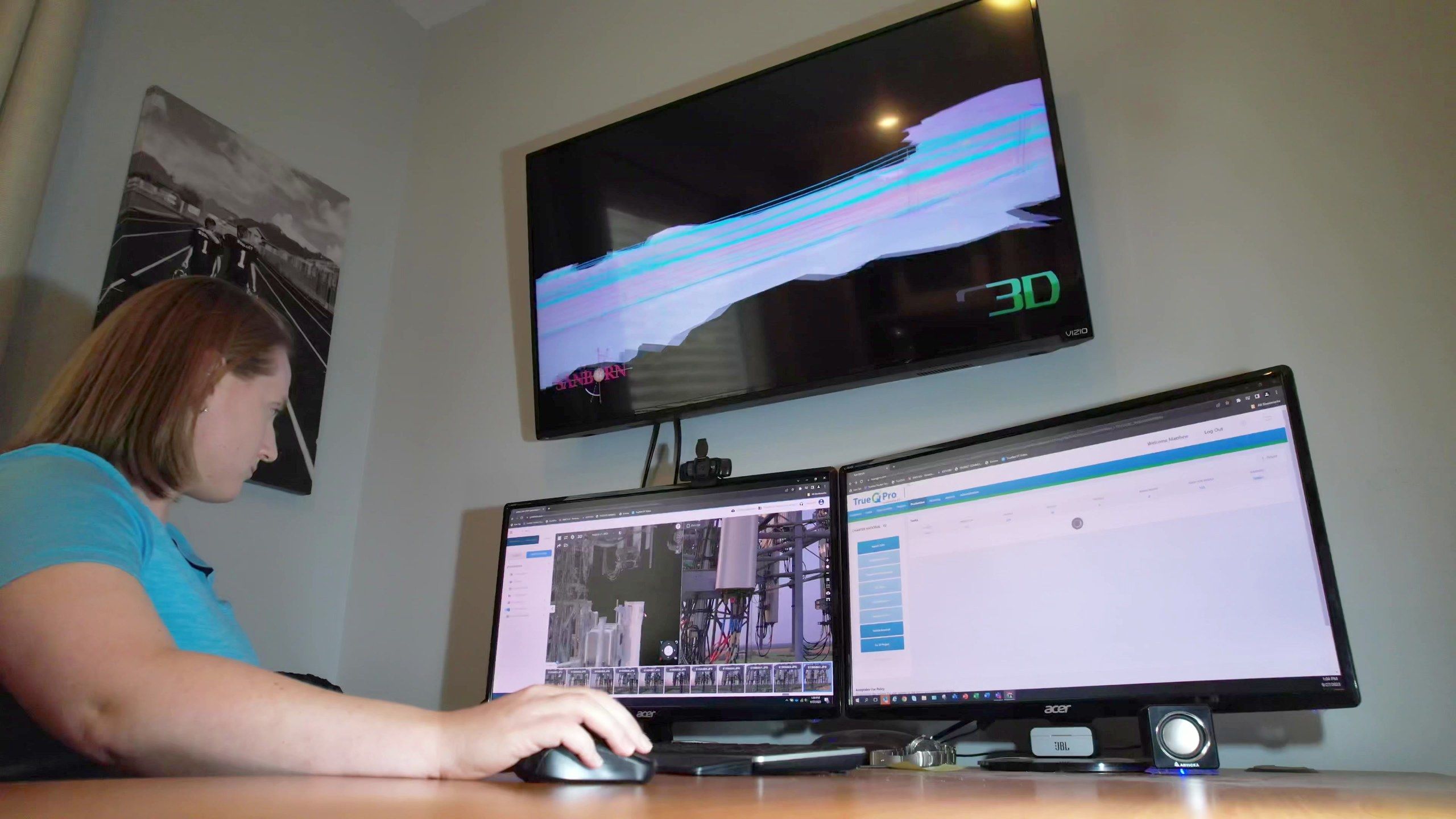
Data center environments
Engineering built to mission-critical tolerances.
Inside plant design, pathway engineering and structured cabling documentation for data center programs, with the same rigor we bring to OSP: constructable, QA/QC-verified packages.
Inside the building: Onsite InstallationWhy TrueNet engineering
Accuracy and consistency at program scale.
Built for large, multi-market programs. We engineer in-house with experienced professionals and standardized workflows that reduce downstream risk.
Customers choose TrueNet Engineering for designs that are intended to get built, not just submitted.
Problems we solve
Programs back on schedule.
For Tier 1 and Tier 2 ISPs, privately funded and municipal fiber providers, data center programs and critical infrastructure partners running complex, high-volume networks.
- 01
Long-haul routes crossing many jurisdictions, rural and environmentally sensitive land
- 02
Permitting bottlenecks and inconsistent approvals
- 03
Designs that need rework during construction
- 04
Engineering and build teams out of step
- 05
Disruption from internal reorganization
Facing one of these now? Tell us about the program